

One of the most notable anime that has risen in popularity is none other than Demon Slayer: Kimetsu no Yaiba. From its intense action to its memorable characters, the work of Koyoharu Gotouge has captivated audiences worldwide. In 2021, the series made its cinematic debut with Demon Slayer: Mugen Train, and the film would become one of the highest-grossing films in Japanese cinema history. Since then, the series has made several appearances on the big screen with its various specials commemorating the start of a new arc. However, the anime has reached its final chapter, and instead of just having another special, the series has begun its conclusion with a new movie, Demon Slayer: Infinity Castle.
Directed by Harou Sotozaki, the story follows Tanjiro Kamado and the rest of the Demon Slayer Corps as they go on a mission to defeat Muzan Kibutsuji, the leader of the demons. However, before the battle can begin, Muzan throws the Demon Slayers into the Infinity Castle, where they must confront a horde of demons as well as the Twelve Kizuki. The decision to adapt Demon Slayer’s finale was made due to the arc’s scale and pacing. To capture this direction, it was also determined that Infinity Castle would be split into a trilogy of films, starting with the first movie titled “Akaza Returns”. The concept of turning this finale into a Film Trilogy was a unique way to conclude the anime series, with the potential to have a significant impact on anime films. Therefore, the question on my mind as I entered Infinity Castle was simple: Is the anime film a cinematic event worthy of its series’ reputation?

The film faced a daunting task of continuing the story from the anime while also laying the foundation of the trilogy. Fortunately, it achieved this through compelling storytelling. Plunging directly into the conflict, the plot followed a structure that was action-packed and reminiscent of a traditional anime arc. While this approach may have been unconventional, it was undeniably innovative in its execution. Each plot point, from the Corps’ plan to stop Muzan to the demon’s backstories, felt relevant and contributed to the grandiose scope of the story, which was worthy of the big screen. The plot’s climax delivered in an intense and dramatic battle that lived up to the storytelling of the anime. Needless to say, it had me wanting more.
Demon Slayer, like most anime, features an ensemble of characters that are versatile and memorable, and this cast was in full force for Infinity Castle. Naturally, the cast was led by Tanjiro, whose development took me by surprise. The young Demon Slayer has gone through so much already that I did not believe he would have much progression in this film. Yet I was proven wrong as the film dives into the character’s backstory, which would go a long way to cement Tanjiro’s journey. As for the rest of the corps, characters such as Zenitsu had a moment to shine, as did members of the Hashira, particularly Giyu Tomioka and Shinobou Kocho. As for the demons, characters like Doma and Kaigaku were formidable antagonists; yet the star of the show was Akaza. The Upper Three Kizuki had an impressive debut in Mugen Train, but his development in this film made the demon a fantastic villain. As for the notorious Muzan, his time in the movie was limited, but his presence was appreciated and went a long way to build up the character’s inevitable transformation.
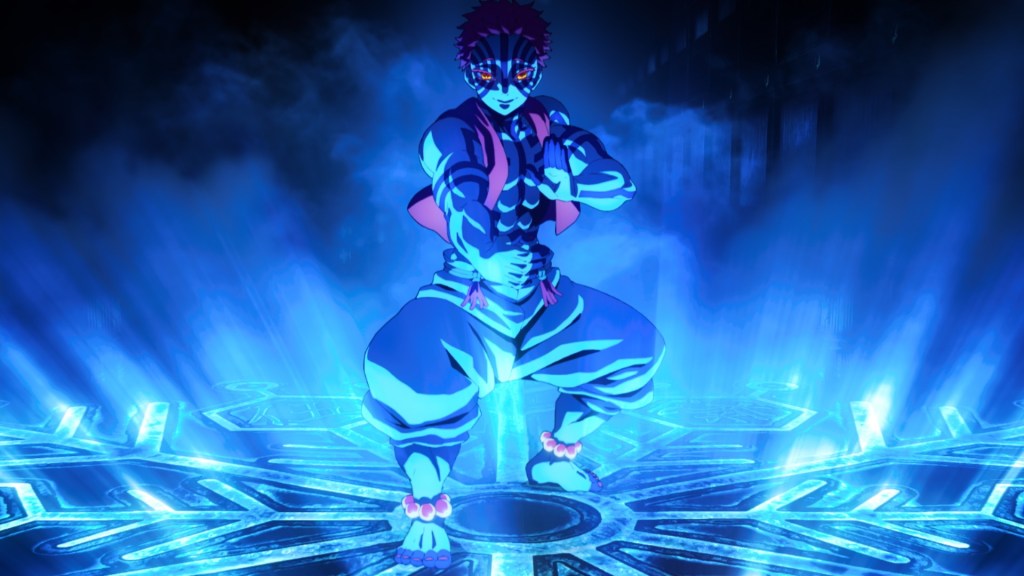
Demon Slayer has excelled in many areas, but most notably in the series’ sense of presentation—especially when it comes to animation and music. In the case of Infinity Castle, the movie’s spectacle was exceptional. The animation was astonishing, capturing the series’ style with fluid execution. This was evident in the film’s action sequences, which were stupendous. Each fight was more dynamic and exciting than the last, and the animation captured this aspect keenly and gloriously. The music, created by Go Shina and Yuki Kajiura, was equally impressive. The score captured the series’ grandeur while providing an exciting soundtrack for the film. Each aspect was able to capture the cinematic nature of this series, solidifying the anime’s place on the big screen.
Demon Slayer: Infinity Castle is truly astounding. As an anime film, it magnificently elevates the series’ elements, and as an animated film, it impresses with its spectacle and style. Infinity Castle sets the stage for the anime’s finale, and it begins with this captivating and epic first chapter. I can hardly wait for the next part of this trilogy, but until then, I must tip my hat and commend this cinematic animated film event.

er: Kimetsu no Yaiba. From its intense action to its memorable characters, the work of Koyoharu Gotouge has captivated audiences worldwide. In 2021, the series made its cinematic debut with Demon Slayer: Mugen Train, and the film would become one of the highest-grossing films in Japanese cinema history. Since then, the series has made several appearances on the big screen with its various specials commemorating the start of a new arc. However, the anime has reached its final chapter, and instead of just having another special, the series has begun its conclusion with a new movie, Demon Slayer: Infinity Castle.
Directed by Harou Sotozaki, the story follows Tanjiro Kamado and the rest of the Demon Slayer Corps as they go on a mission to defeat Muzan Kibutsuji, the leader of the demons. However, before the battle can begin, Muzan throws the Demon Slayers into the Infinity Castle, where they must confront a horde of demons as well as the Twelve Kizuki. The decision to adapt Demon Slayer’s finale was made due to the arc’s scale and pacing. To capture this direction, it was also determined that Infinity Castle would be split into a trilogy of films, starting with the first movie titled “Akaza Returns”. The concept of turning this finale into a Film Trilogy was a unique way to conclude the anime series, with the potential to have a significant impact on anime films. Therefore, the question on my mind as I entered Infinity Castle was simple: Is the anime film a cinematic event worthy of its series’ reputation?

 The Cinematic Log
Leave a comment