
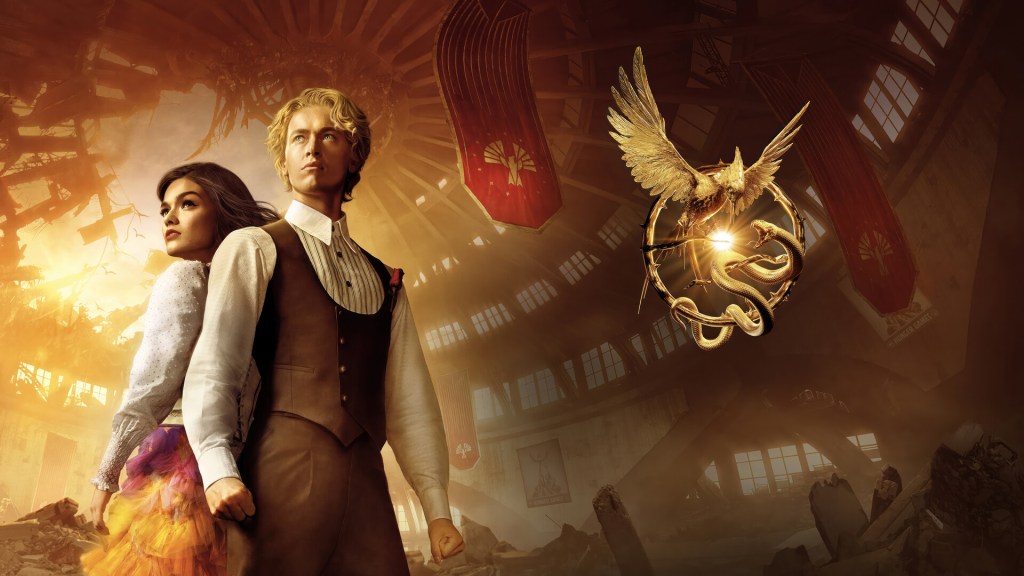
In 2010’s the movie saw many adaptations of young adults hit the big screen; but few were able to break the mold and stand with series like Harry Potter and The Lord of the Rings. Yet there were exceptions to this and one of them was none other than the sci-fi series known as The Hunger Games. Based on the work of Suzanne Collins, The Hunger Games centers on a dystopian world where young combatants must fight to survive and claim victory for their designated district. The Hunger Games came to the big screen in 2012 and became a hit film franchise for Lionsgate with four movies to its name with the last film The Hunger Games: Mockingjay Part 2, being released in the holiday season of 2015. Since then the series has remained dormant, but there were talks that another movie was in the works. While ideas such as spin-offs were expressed by the studio, a new film was not announced until 2019 when Lionsgate stated they were working with Collins to adapt her prequel to the big screen. After the book was released in 2020, the studio got underway to make the next Hunger Games films; and after eight years of being away from the big screen the world of Panem returns in The Hunger Games: The Ballad of Songbirds and Snakes.
The story takes place over 60 years before the events of the first films and centers on a young Coriolanus Snow (Tom Blyth) who must mentor Lucy Gray Baird (Rachel Zegler) to win the 10th Hunger Games and maintain his position in Panem. To adapt this prequel, returning to direct was none other than Francis Lawrence who helmed the previous three Hunger Games films. Unlike other franchises, The Hunger Games is not a series that I am knowledgeable about as I went into the 2012 film blind about the story; and I preferred it that way so I could see the film with fresh eyes. Needless to say, I came to enjoy the Hunger Games films as I found its worldbuilding and tone compelling. Going into this prequel, I decided to stick with a sheer moviegoing perspective and see the movie simply for what it was; and from that perspective I can say that The Ballad of Songbirds and Snakes lived up to the standards of this film series.

Prequels can be tricky. I feel that the best prequels are the ones that add something to the established plot while finding its own identity. In the case of the Ballad of Songbirds and Songs, this prequel falls under the latter. The plot of this installment follows the structure of its predecessors with most of the story centering on 10th Hunger Games. However the way this plot was structured made a significant difference as its use of a three act narrative gave the story a unique element. When it came to the plot’s tone and themes, the film followed concepts established in previous entries but in a way that did not feel like a mere rehash. To say nothing else the story was engaging as the threads it weaved kept me enthralled all the way up to its gripping conclusion.
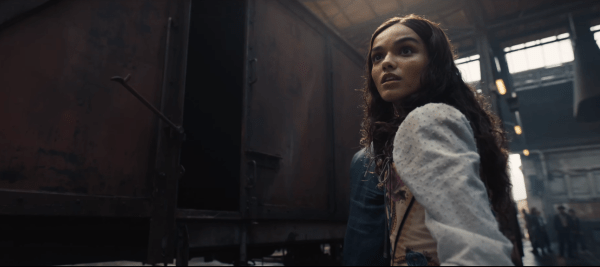
How a prequel handles its cast can be equally as tricky as its story as the established perception of a character can be hard to ignore. Yet in the case of President Snow, this film gave the villain some much needed development. The arc of the younger Coriolanus was engaging and it showed the elite was less of a power hungry madman and more of a survivor looking for any means to stay on top. Along with Snow was the elusive tribute Lucy. Lucy was an interesting addition to the Hunger Games alumni as her suspicious demeanor made her compelling; and Zegler’s performance gave the district girl the right energy. Along with the captivating leads was an array of supporting characters who varied in their significance. Characters like Sejanus Plinth (Josh Andres Rivera) and Tigris Snow (Hunter Schafer) left an impression, but they could get lost in the shuffle. However, if there were two standouts supporting players it was Peter Dinklage as Casca Highbottom and Viola Davis as Dr. Volumnia Gaul. Viola Davis in particular was impressive as she brought a lot of charisma to the deranged game maker and this made the character a perfect fit for the Hunger Games.

As for the presentation, The Ballad of Songbirds and Snakes featured a spectacle that was simple and to the point. The visuals were nothing grandiose but they did work for the movie’s gritty tone. This simplistic direction was also evident in the movie’s action. Action sequences have never been the backbone of this series, but it has been able to craft exciting and gritty moments and the latest installment lived up to this with sequences such as the 10th Hunger Games. One aspect that shined in the movie was the music, and returning to conduct the score was none other than James Newton Howard. Along with featuring a thematic score, the music also incorporated several songs sung by Rachel Zegler and this gave the soundtrack, and the movie itself, a sense of style that was fitting for the series.
The Hunger Games: The Ballad of Songbirds and Snakes is a strong entry for the acclaimed series. While some of its direction could be too simplistic, the film made up for it with its stellar storytelling and character development. As a prequel, the film serves more as a character piece then a whole new chapter; and as a return the movie does a good enough job reestablishing what made the Hunger Games so memorable. Whether this is a new start for the series remains to be seen, but for now the odds remain in this franchise’s favor thanks to installments such as this one.



 The Cinematic Log
Leave a comment