
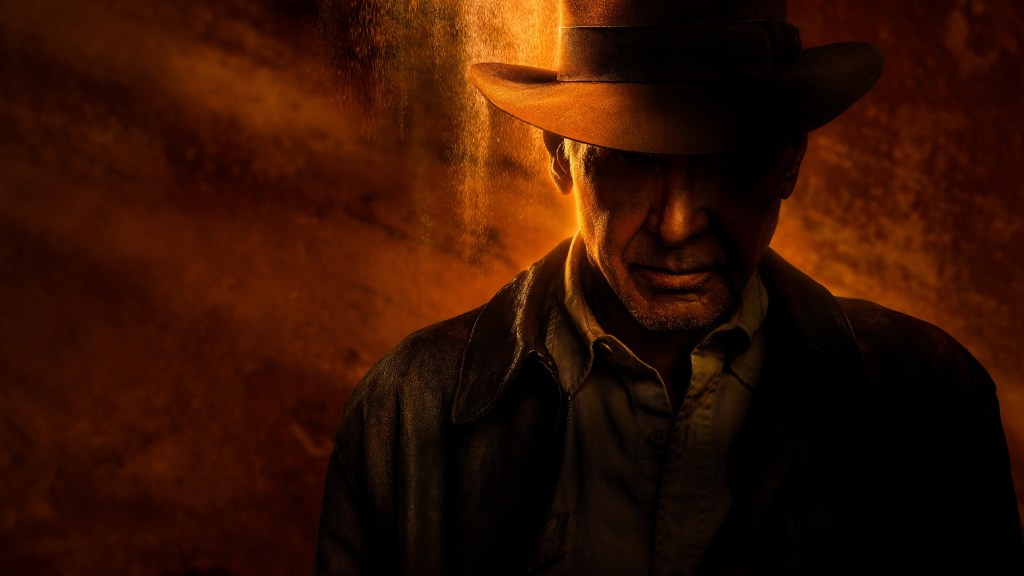
There have been many heroes to grace the silver screen from grizzled soldiers to even superheroes. Yet perhaps none may have more notoriety than that of the iconic adventurer Indiana Jones. The famed explorer made his debut in the film Raiders of the Lost Ark, directed by none other than Steven Spielberg, and became a household name for cinema with his various sequels. The character has gone to inspire many stories in pop culture and (if it is not obvious) even help aspire a certain Film Adventurer. It has been 15 years since Dr. Jones has graced the big screen, and it felt it would likely be the last. However, it would seem the adventurer had one more journey in him and that adventure comes in the form of the new movie: Indiana Jones and the Dial of Destiny.
The latest film deals with Indiana (Harrison Ford) who finds himself donning his hat and whip again after his goddaughter Helena Shaw (Phoebe Waller-Bridge) takes an artifact and two embark on a journey to complete Archimedes’ dial before the Nazi scientist, Jurgen Voller (Mads Mikkelson), can use it to change the course of history. Despite being the last Indy film, the new movie has many first for the series with the most prominent being that the movie is not directed by Steven Spielberg. Instead taking up the director’s chair is none other than acclaimed filmmaker James Mangold. Despite the change in directors, Ford seemed eager to work on the project as felt the previous entry, Kingdom the Crystal Skull, was not a fitting conclusion for the character. With the movie featuring Ford’s final performance as the iconic character, as well as my personal admiration for the series, there were more than enough reasons to see this new installment; and after embarking on this last crusade, I found The Dial of Destiny to be a somber, but satisfying, conclusion for the famed series.
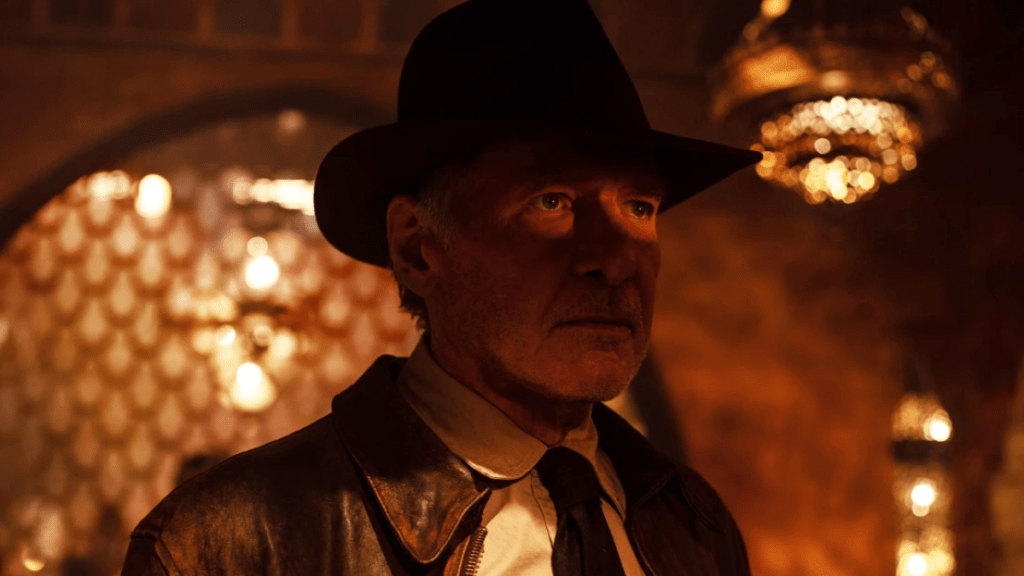
Going into this movie, I wondered just how would it bring Indy’s story to an end. While some may think the story would be some grandiose tale that would bring things full circle, the truth is that is not how the series has told its stories. The movies deal with Indy getting caught up in a new adventure and, for the most part, Dial of Destiny was precisely that. The plot followed the series’ formula, from utilizing ancient civilizations to Indy journeying across the globe, in way that felt appropriate and not redundant. Yet what I found so engaging about this plot was the more personal element behind Indy’s story; a direction that I feel Mangold strives in his movies. This direction was much appreciated as I felt like the story could not just have Indy ready for another adventure; in fact, this was an element I wanted to see in the previous film. Yet the execution of this direction could be off-putting and I think this could be due to a contrast between filmmakers. Another questionable point was the movie’s use of time travel. While I appreciated the movie not going in a typical direction with the concept, it was disconcerting to see Indiana Jones utilize another sci-fi element.
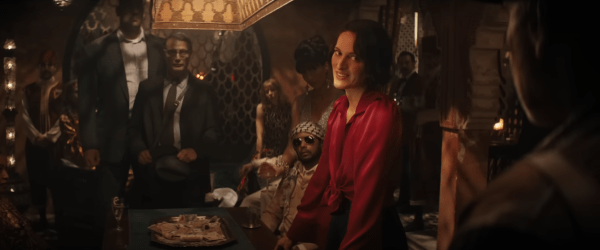
Much like the story, I was curious to see how the movie would handle the character of Indiana Jones. Indy undoubtedly has a certain image and presence so seeing him older can be difficult to see. Yet I feel that Indy’s portrayal in the new film was fitting. Despite being an aged adventurer, Indy’s presence was still there and the character showed off a different kind of grit. As performances go, Harrison Ford was in rare form in his final portrayal as the character. Ford was able to bring the charm that has made the character so endearing while adding a few more layers to his iconic role. As for the rest of the cast, it was fair ensemble for the series. Helena, though contrived in some places, was different companion for Indy while Phoebe did her best to make this character enjoyable. The cast featured decent supporting characters like Teddy (Ethan Isidore) and Basil Shaw (Toby Jones), and it was great to see characters like Sallah (John Rhys-Davies) again. As for villains, I enjoyed Mikkelson as Voller. While the series known for its maniacal rogues, Voller was a more methodical opponent foe for Indy while Mikkelson’s performance gave the Nazi scientist a surprising amount of depth.
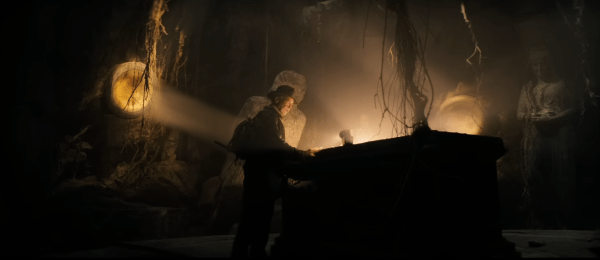
The adventures of Indiana Jones are known to be action packed spectacles, and The Dial of Destiny was no different. With the movie dealing with an older Indy, I was not sure if the action scenes would hit the way they used to. However, the film to be proved to be up to the challenge as the action scene had that creative flare that the series is known for while being practical in their executions. When it came to visuals, the film’s use cgi was decent with the most notable sequence, for better of worse, were the scenes featuring the younger Indy. Yet it would not be an Indiana Jones without a score by legendary composer John Williams. Willaims’ music for this series is among the composer’s best and it only seemed fitting for him craft a score for this finale. The music for The Dial of Destiny was as adventurous as ever and it was a solid companion for the movie- particularly when it came to the action scenes.
Indiana Jones and the Dial of Destiny is a fitting addition to the iconic series. The film had a solid sense of adventure which evident in its engaging storytelling and its title character. Yet the movie could be excessive in its execution which led to the experience to feel a bit daunting. I think this feeling of uncertainty comes down to James Mangold being a different director than Spielberg, and this could issue deteriorate with multiple viewings. For now, I will say that Indiana Jones and the Dial of Destiny was not a perfect conclusion but a satisfying one as it cements the legacy of the series by being another great adventure.


 The Cinematic Log
Leave a comment