
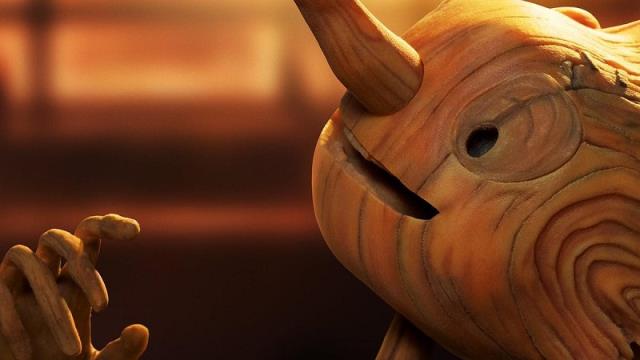
When it comes to fairy tales, there are few like the adventures of Pinocchio. The story by Carlo Collodi has captured the imagination of many and has played a pivotal role in pop culture. When it comes to movies, the most notable version of the story is none other than the 1940 Disney film which is one of the most iconic movies for the studio. This take on the Italian fairytale was, in fact, revisited this year when Disney released a live action adaptation of Pinocchio-though the results were not the same when compared to its animated counterpart. Yet Disney was not to be the only studio to bring this classic tale to life as Netflix has released their own version of Pinocchio, directed by none other than Guillermo Del Toro.
Like every adaptation before it, Guillermo del Toro’s Pinocchio tells the story of how Pinocchio (Gregory Mann) comes to life and becomes the son of Geppetto (David Bradley) as well as receiving help from a conscientious cricket (Ewan McGregor). Though in the case of this tale, Pinocchio must learn what it means to be a real boy in 1930’s Italy. The tale of this film’s production is an interesting one. This film has been a passion project for del Toro for many years, but the movie went through several forms until it found itself in development hell. It was not until 2017 until the movie found life again and eventually was acquired by Netflix. The idea of del Toro making an adaptation of Pinocchio was definitely interesting as it would surely be a twisted take on the fairytale; and the fact that the film would feature stop-motion animation made it a must see for me. So on the weekend of its release, I ventured into the world of streaming to see the twisted fairytale and found that it exceeded all of my expectations.
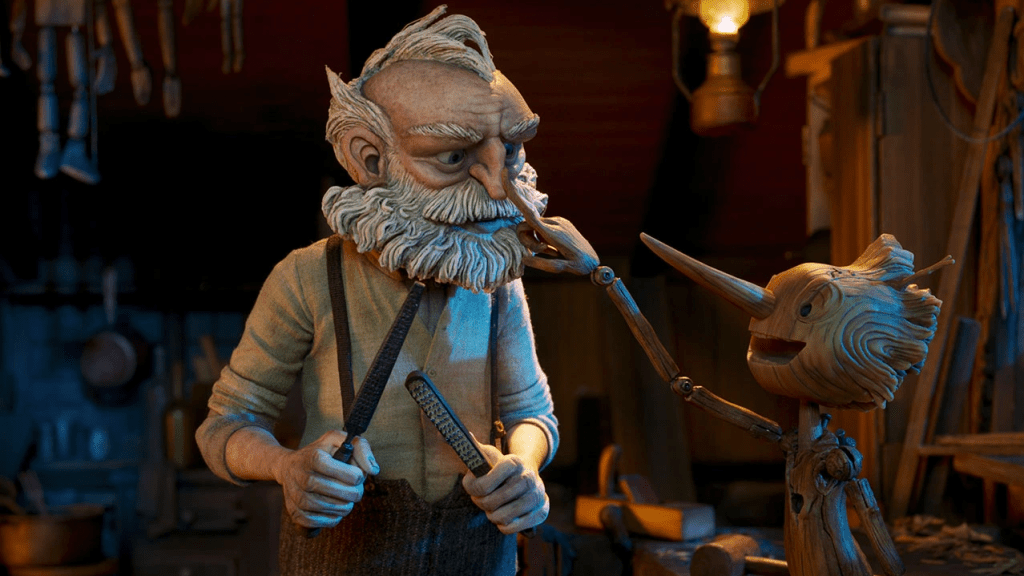
There are several versions of Pinocchio out there, but this take is certainly one of the more dynamic adaptations. Telling the tale in 1930’s setting was indeed a different direction for the movie, and it could have been problematic with setting completely dictating the story’s concept. Fortunately this was not the case.as the movie did quite well in keeping true to the original story. Perhaps the strongest element to the plot was its themes and how they managed to live up to the original’s morals while giving this rendition its own identity. As for the film’s setting, taking place in 1930’s Italy worked out better than I thought as the setting ended up being a fitting place to tell Pinocchio’s story, though it could clash with the more supernatural elements to the tale. Despite its darker tone, this take on the fairytale turned out to be far more touching then I could have imagined and brought a refreshing take to the classic tale..
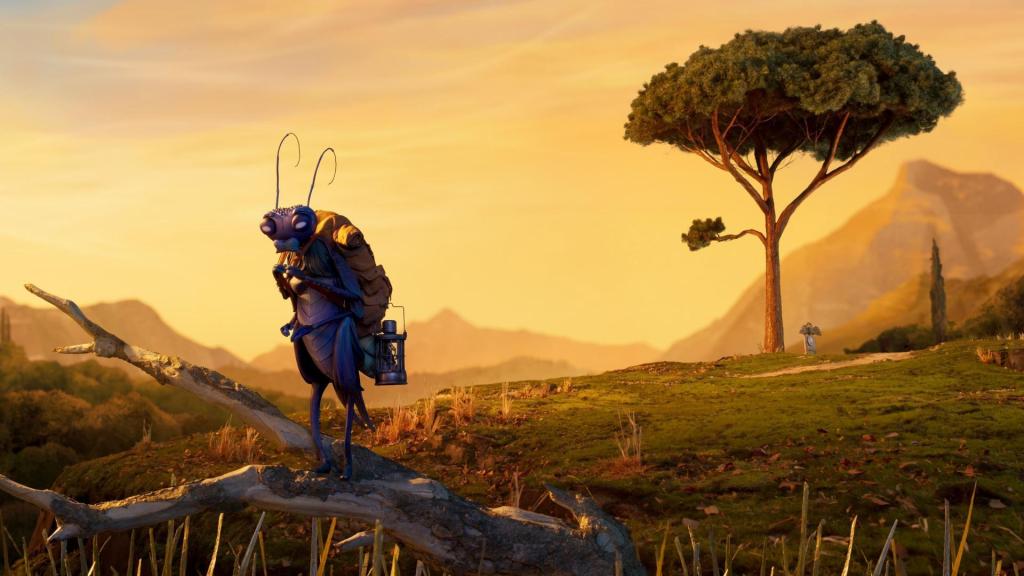
Much like the story, the cast featured an ensemble that was both unique and familiar. When it came to Pinocchio, the character lived up to most interpretations of the wooden boy as he was both mischievous and good-hearted. However, in this take, I was impressed with Pinocchio’s development as well as the energetic performance from Gregory Mann. Equally as impressive was David Bradley as Geppetto. This depiction of the wood carpenter was not as joyous as some would expect, but I really enjoyed the conflict that Geppetto was dealing with and brought a compelling dilemma to Geppetto and Pinocchio’s relationship. Yet Pinocchio would be nothing without his conscience which came in the form of Sebastian J. Cricket. Sebastian was enjoyable to say the least as his comedic side was matched by his knowledgeable nature; and with McGregor’s charismatic performance the movie created one of the best interpretations of this character. The film also featured a strong supporting cast with characters like Count Volpe (Christoph Waltz) and his monkey Spazzatura (Cate Blanchett) standing out in their ways. Rounding things out for the cast was none other than Tilda Swinton as both the Wood Sprite and Death which gave an endearing presence to this magical cast.
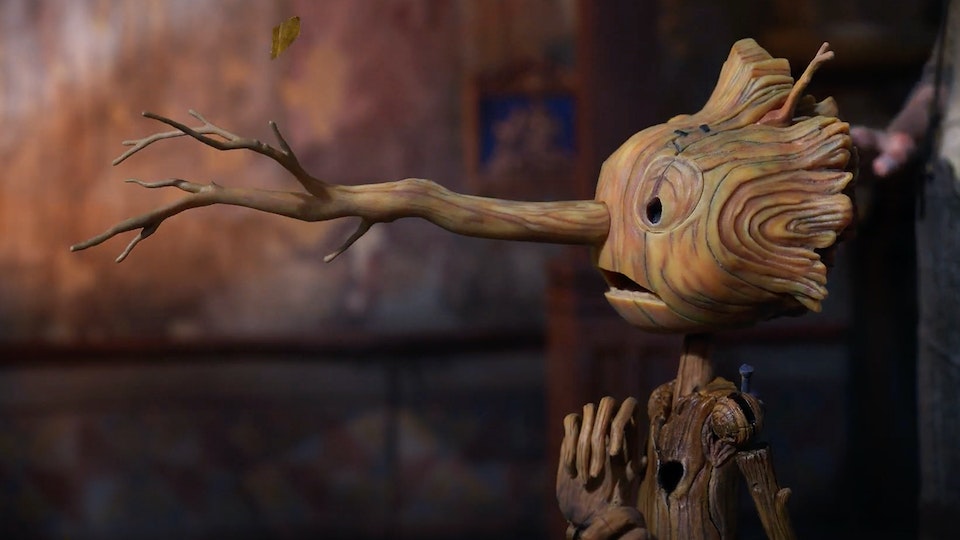
When it came to its presentation, Pinocchio was a wondrous spectacle. The film’s animation was among the best I have seen in this subgenre with keen stop motion and a stellar blend in the film’s visuals. Yet what took me by surprise was the film’s music and how it turned out to be a musical of sorts. The songs could be short but they left an impression with numbers such as “Everything is New to Me” and “Better Tomorrows” being highlights for the movie. Along with the catchy songs was the solid score by Alexandre Desplat. The score was certainly fitting for the movie as its enchanting tunes created the right tone for this fantastical feature.
Guillermo del Toro’s Pinocchio is a strange and wondrous adaptation. While its setting could be off putting, the keen direction in both the story and characters brought something new to this classic tale. This stellar direction was also evident in the movie’s presentation which featured stunning animation and an immersive soundtrack. This film was a passion project for del Toro and it indeed shows as it is easily one of the filmmaker’s best movies to date. I could not imagine I would love this film as much as I did, but sure enough this twisted take on Carlo Collodi’s novel is among my favorite adaptations of the story, and it is an animated feature that I must tip my hat to.


 The Cinematic Log
Leave a comment