
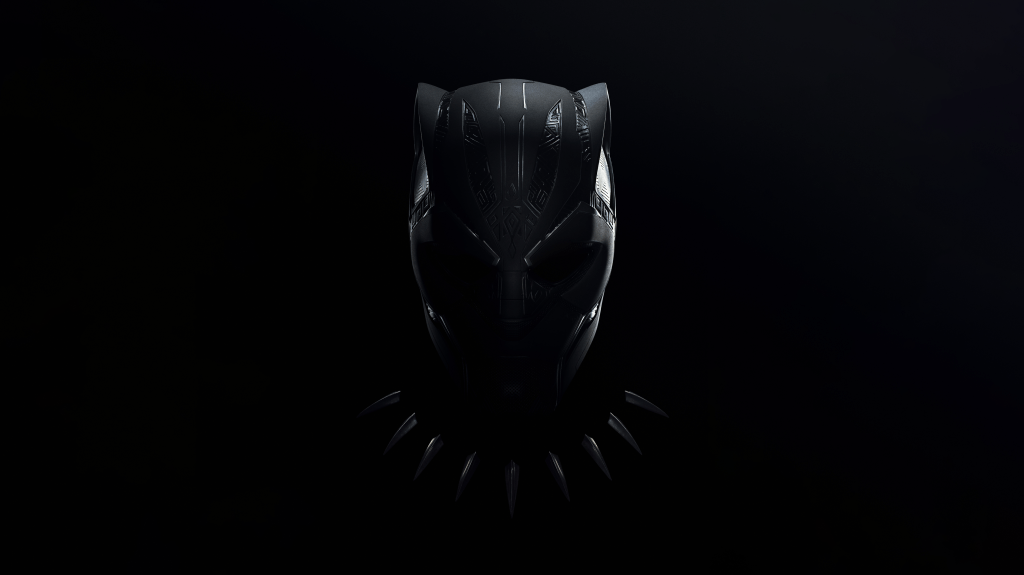

The Marvel Cinematic Universe has brought many characters to the limelight, from Iron Man to the Guardians of the Galaxy, and among these heroes is none other than the king of Wakanda: Black Panther. The hero made cinematic debut in Captain America: Civil War and then received his own movie in 2018. There the Marvel hero achieved super stardom as Black Panther grossed over one billion dollars in the box office. With such an accomplishment it was clear Marvel had another success in their hands, and it did not take long for a sequel to be greenlit. However the movie saw a major setback as, in 2020, Black Panther star Chadwick Boseman passed away. This development left many wondering what would become of Black Panther and Wakanda., but the answer came sooner than expected as, two years after Boseman’s passing, Wakanda would return in the last film in Marvel’s Phase 4-Black Panther: Wakanda Forever.
Directed by Ryan Coolger, the story deals with Shuri(Letitia Wright) and the rest of Wakanda dealing with the passing of T’Challa. However when the mysterious Namor (Tenoch Huerta Meija) and his underwater kingdom of Talokan threaten both Wakanda and the world, it is up to Shuri and the other Wakandan warriors to challenge this new foe. After Chadwick’s passing, both Coogler and Marvel made it clear that they were not going to recast T’Challa for the new movie and instead hoped to honor Boseman’s memory with the sequel. Along with being a tribute, the sequel serves as an introduction to one of Marvel’s oldest characters in Namor. Despite my interest in seeing Namor’s cinematic debut, I cannot say I was enthusiastic to see this new movie for various reasons. Nevertheless I decided to give the new Marvel film a chance and hope that Wakanda Forever would be a proper continuation to the Black Panther legacy. It was not.
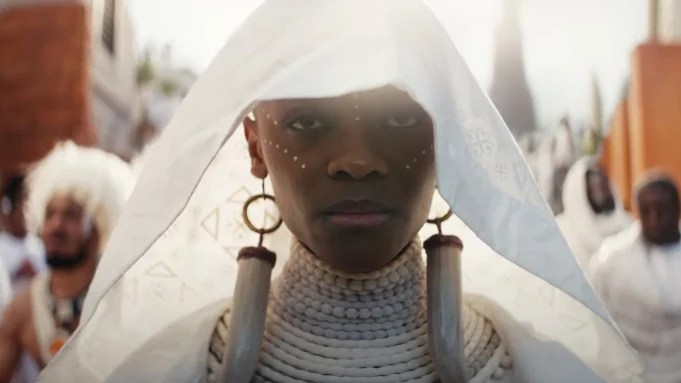
Wakanda Forever tried to be many things. Along with being a continuation the movie tries to live up to the legacy of Black Panther; and the result was a plot in shambles. Between the unsettling tone and the lacking conflict, the story was a perplexing experience to say the least. Along with doing little to expand on the Black Panther mythos, the story did not do Namor’s any favors as his origin was questionable and the world of Talokan brought nothing new to the MCU. Furthermore the subplot of Everett Ross (Martin Freeman) trying to resolve the conflict between Wakanda and the US did very little for the movie as it hardly added any tension to the story. Yet these problems may have been more tolerable if the story was not so predictable. Having a predictable story is not always a bad thing, but the plot was telegraphed so poorly that it not only led to seemingly no surprises, but made this superhero epic a chore to sit through.
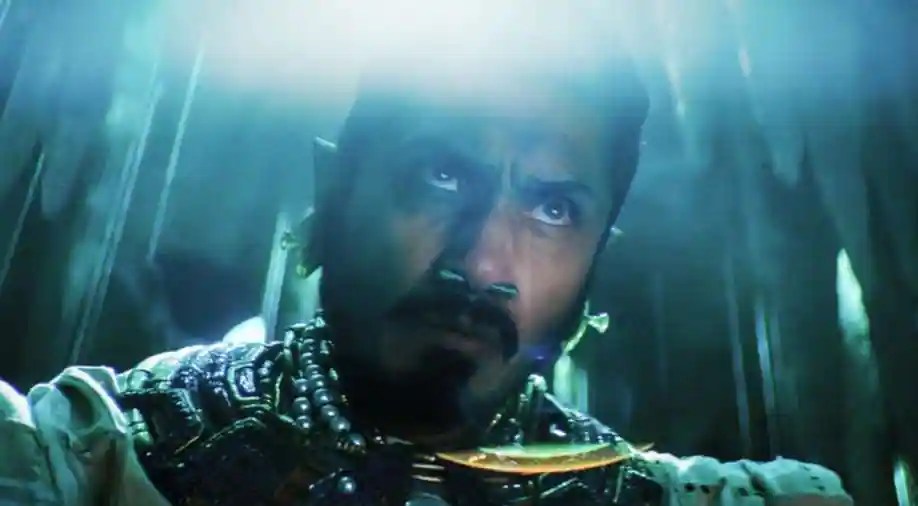
This air of uncertainty not only surrounded the story, but the cast as well. From a performance standpoint the cast was fine with the likes Danai Gurira (Okoye) and Angela Bassett (Ramonda) being major highlights for the movie. However when it came to character direction, the movie left much to be desired. In the case of Shuri some her progression was fine, but her role felt off-putting and it was difficult to get behind her a lead protagonist. Other characters like Nakia (Lupita Nyong’o) and M’Baku (Winston Duke) had their moments but offered little to the movie while additions such as Riri Williams (Dominique Thorne) felt unnecessary. As for Namor, the Sub-Mariner was yet another lacking antagonist for the MCU. While Huerta does his best and some aspects felt appropriate for the character, Namor lacked depth and this prevented the anti-hero from having a memorable presence in both the movie and the MCU as a whole.
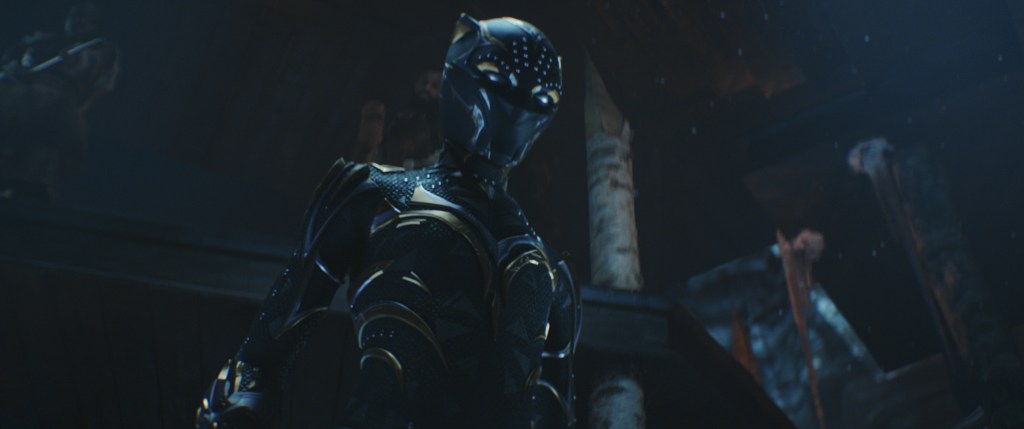
As a spectacle, Wakanda Forever was decent to say the least. Elements such as the cinematography had stellar execution while the visuals were (for the most part) effective in capturing the film’s superheroics. However these aspects only went so far as the film’s presentation could be very inconsistent; which was evident in the movie’s action. While sequences such as Namor’s battles were impressive, some fight scenes felt daunting and had little impact. As for the music, the score by Ludwig Goransson was just alright. The music to Black Panther was thematic and is arguably one of the best scores to grace the MCU. The music to Wakanda Forever, on the other hand, had some stellar tracks, but lacked the grandiose sounds that gave the 2018 film such an engulfing presence.
Despite everything, Black Panther: Wakanda Forever is another lackluster installment in the Marvel Cinematic Universe. Between the perplexing storytelling and unjointed elements like the action, this sequel had a presentation that came off as uneasy; though aspects like the cast and cinematography gave this superhero film some merit. While trying to be a tribute to Chadwick Boseman’s legacy, the movie also tries to keep true to MCU formula; but this only gave the movie an incoherent direction that led to very little in comparison to both its predecessor and other installments in the MCU. Black Panther: Wakanda Forever is not what I call a glorious return for Wakanda, but merely a underwhelming sequel and a halfhearted Marvel film to conclude Phase 4.


 The Cinematic Log
Leave a comment